
THE AI
CINEMA LAB
AI IS THE MEDIUM. CINEMATOGRAPHY IS STILL THE LANGUAGE.
We use generative models as cinematic instruments — combining visual direction, physicality, continuity and editorial judgment to turn generated imagery into film.
DRAG TO ROTATE
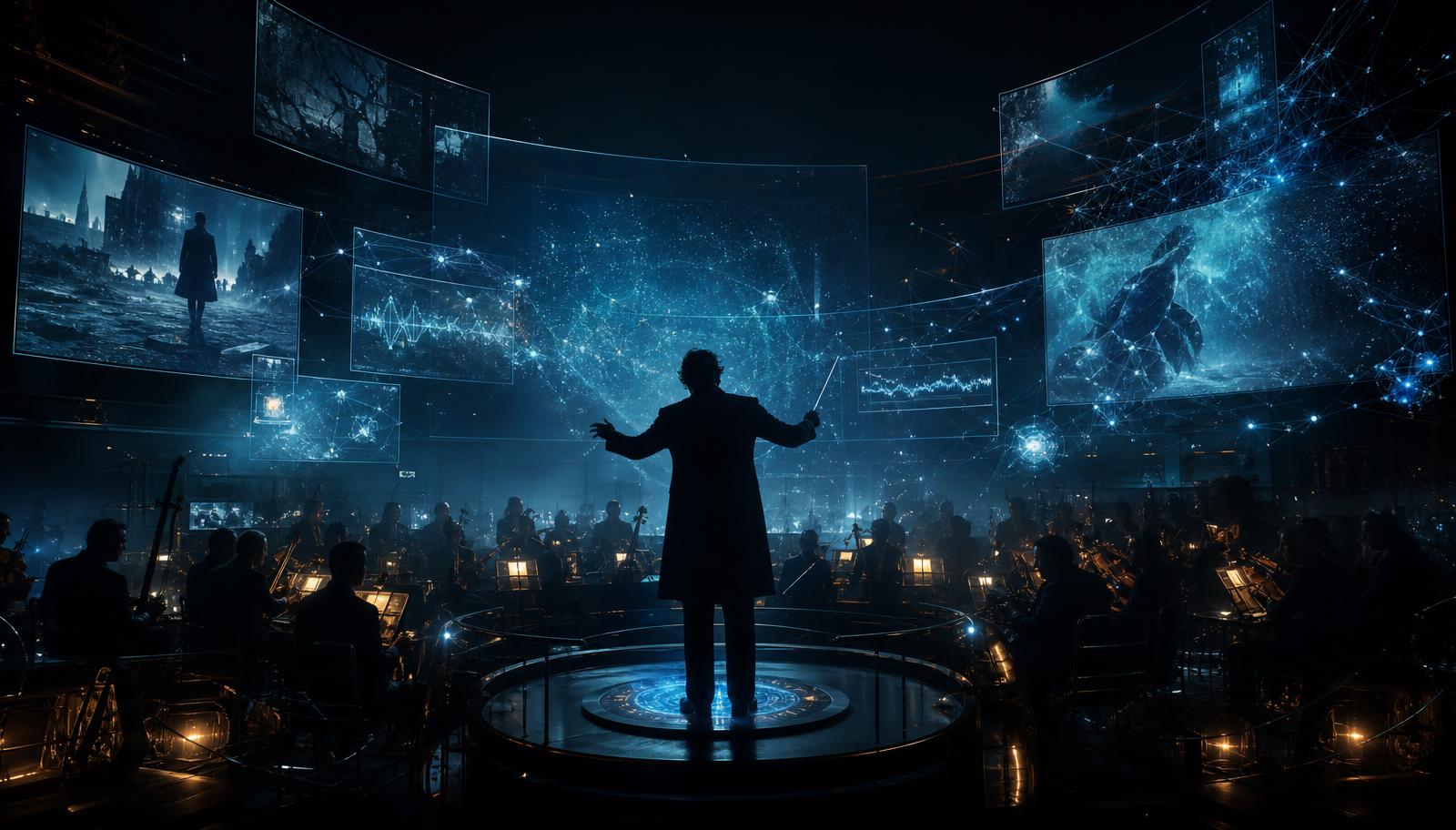
“Generative models can produce an image in seconds. Building a believable world is a different problem. Our process is about directing the uncertainty — shaping motion, atmosphere, continuity and performance until the generated becomes cinematic.”
01
WORLDBUILDING
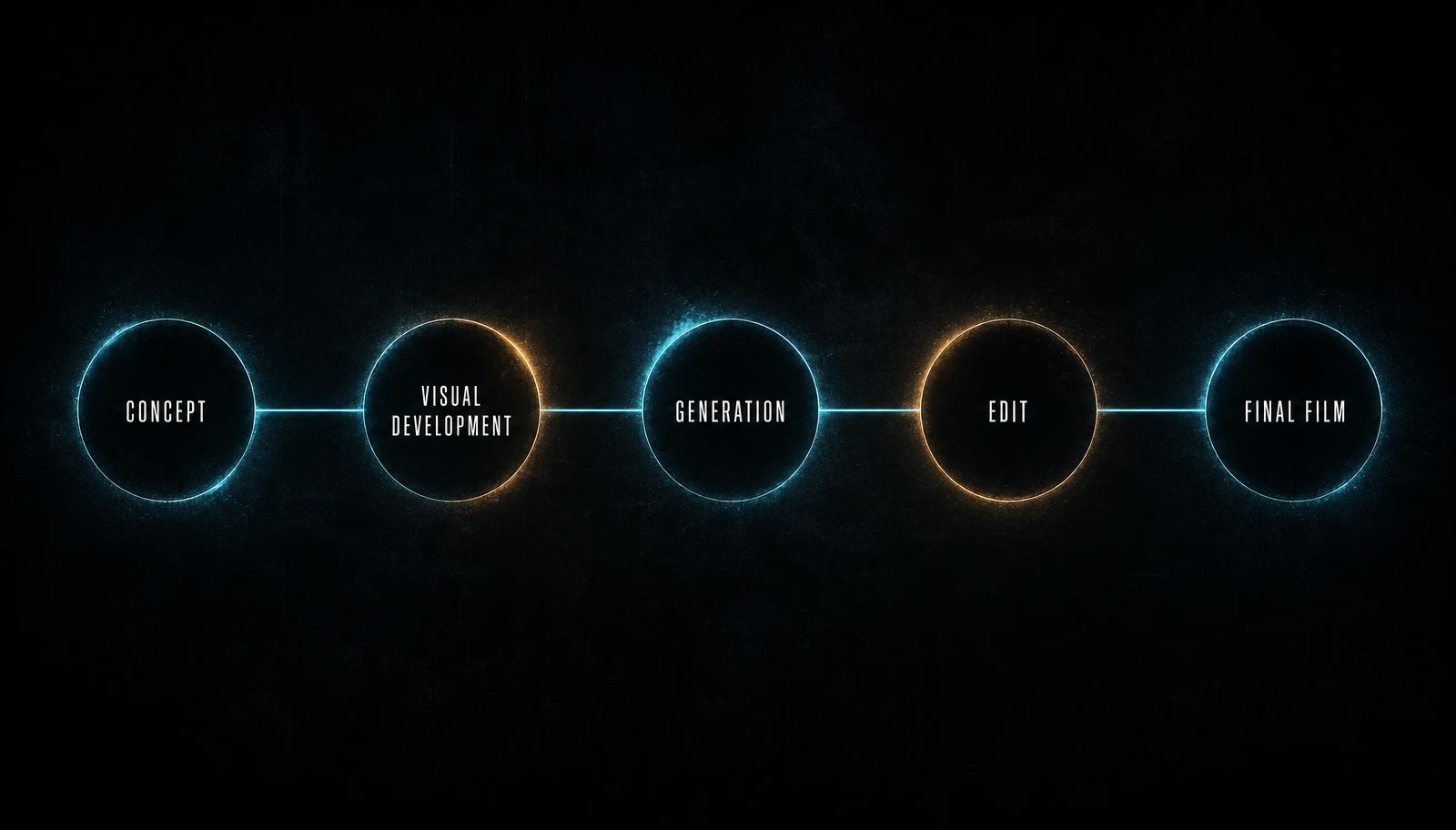
Every film begins with a world. Narrative, characters, environments and visual identity are established before generation begins.
02
VISUAL DEVELOPMENT
Stories are translated into sequences, compositions and visual moments before they become moving images.
03
CINEMATIC DIRECTION
Generated footage is directed with the same attention to perspective, movement, light, scale and continuity expected of traditional cinema.
04
GENERATIVE CINEMA
Different generative systems are selected according to the demands of the scene. The goal isn’t to maximize generation — it’s to find the right tool for the right cinematic problem.
05
ITERATION
The first generation is rarely the final frame. Scenes are refined repeatedly until movement, performance, atmosphere and continuity feel intentional.
06
EDIT & FINISH
Generated sequences are assembled, paced and refined in post-production, with sound, voice, music and visual finishing completing the cinematic experience.
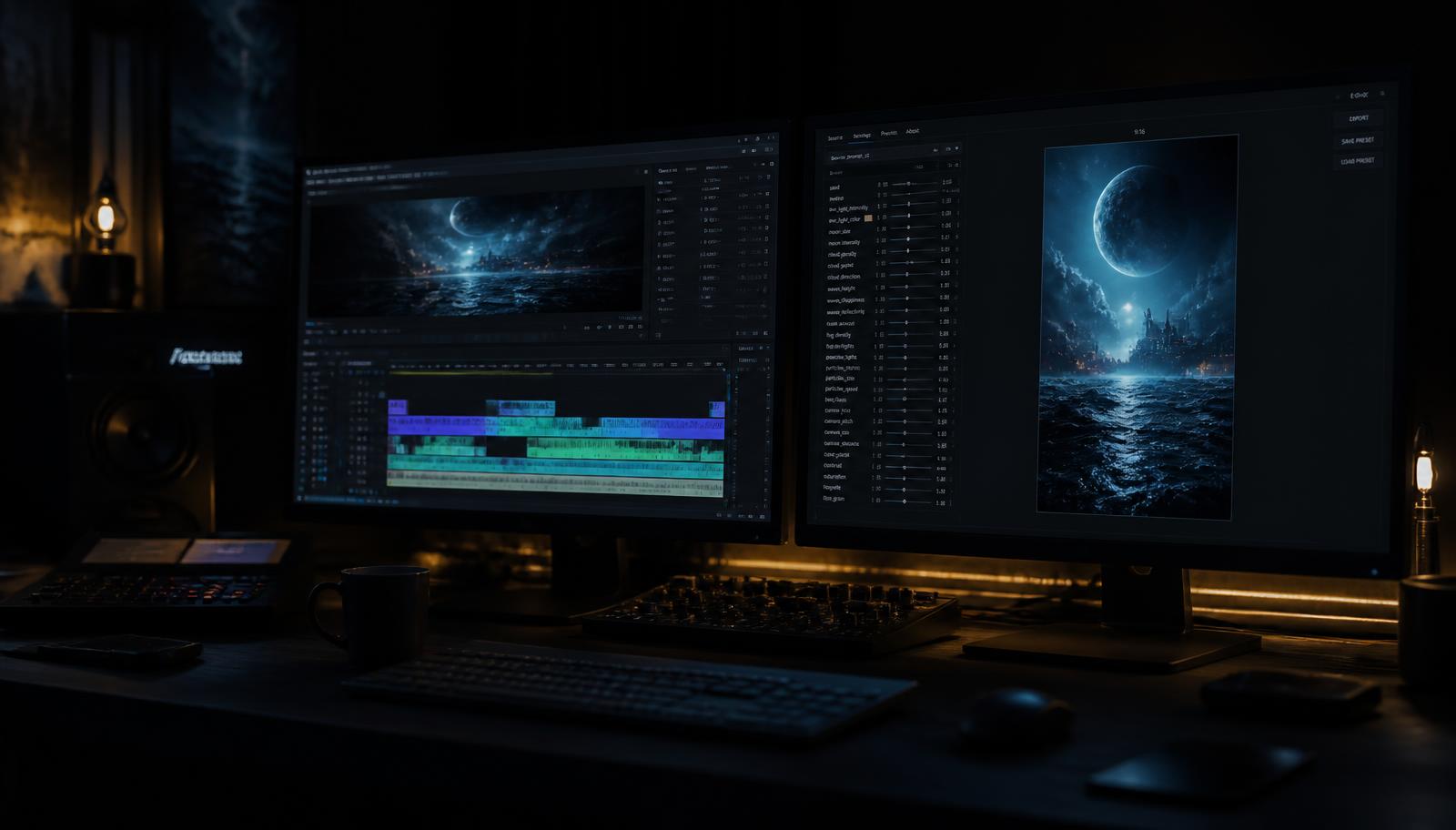
Multiple generative systems are used throughout production, each selected according to the creative demands of the shot.
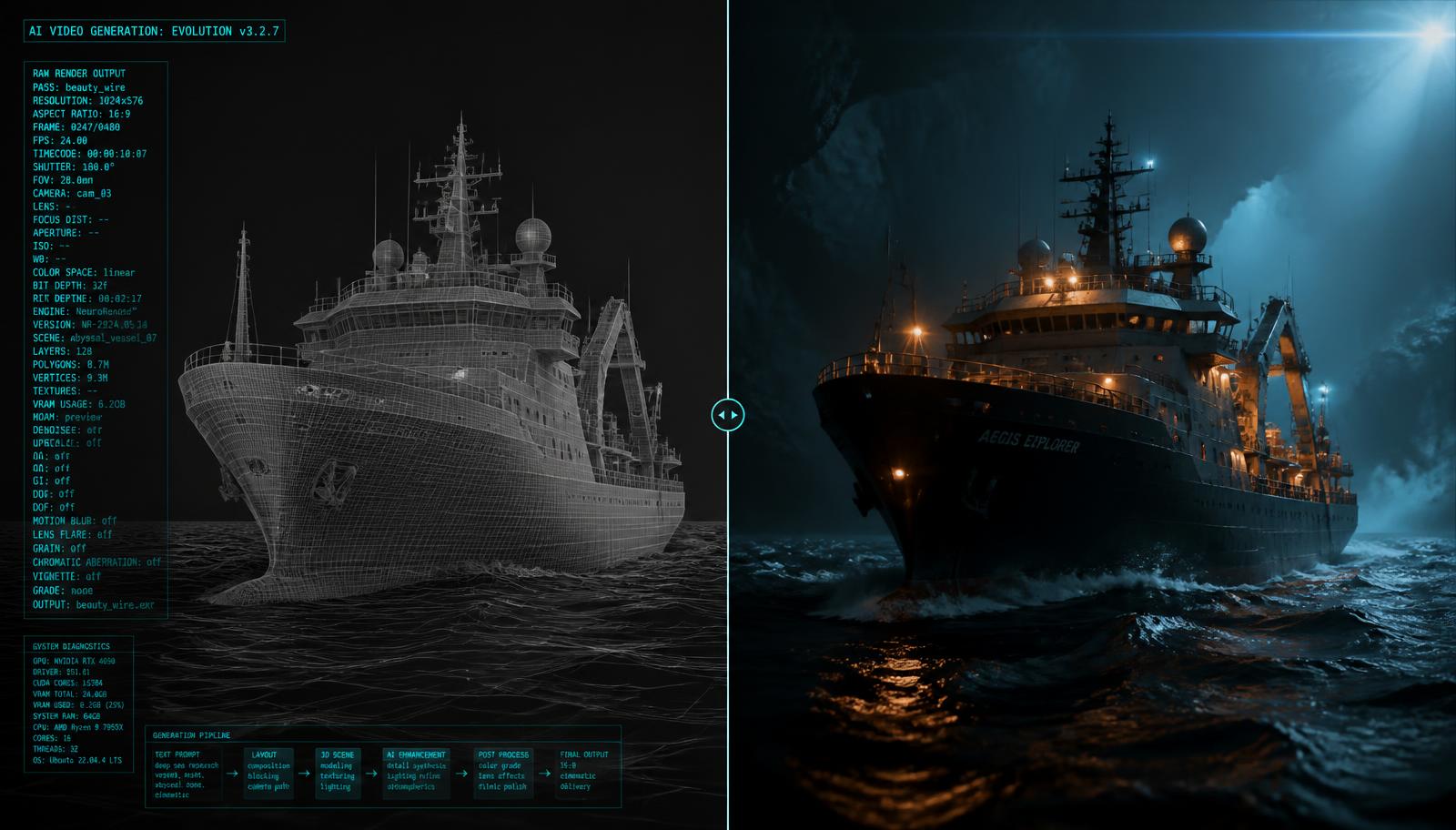
A generated sequence is only the beginning. Selection, timing, editing, sound and finishing transform individual generations into a coherent cinematic sequence.
THE PRINCIPLE
THE GOAL IS NOT TO MAKE AI LOOK LIKE AI.
The goal is to create images that feel as though they belong to a world — with weight, scale, atmosphere, consequence and continuity.
Technology generates the possibilities.
Direction decides what survives.
THE OTHER INSTRUMENT — SOUND
The same discipline runs past the frame. Composition, vocals and mixing are directed like any shot — cinematic music written, produced and finished in-house, released as regional-language singles on all major streaming platforms.